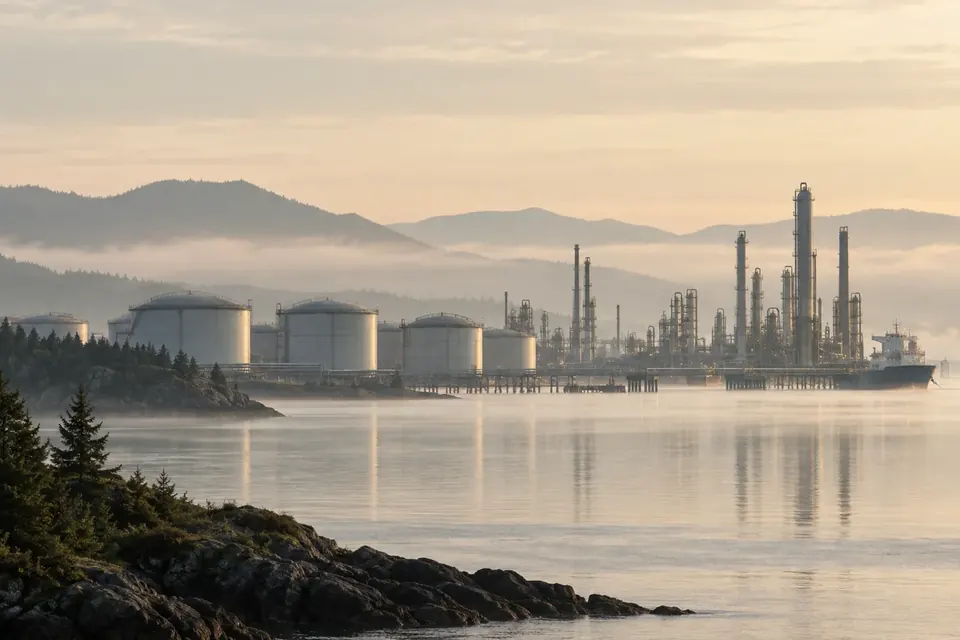
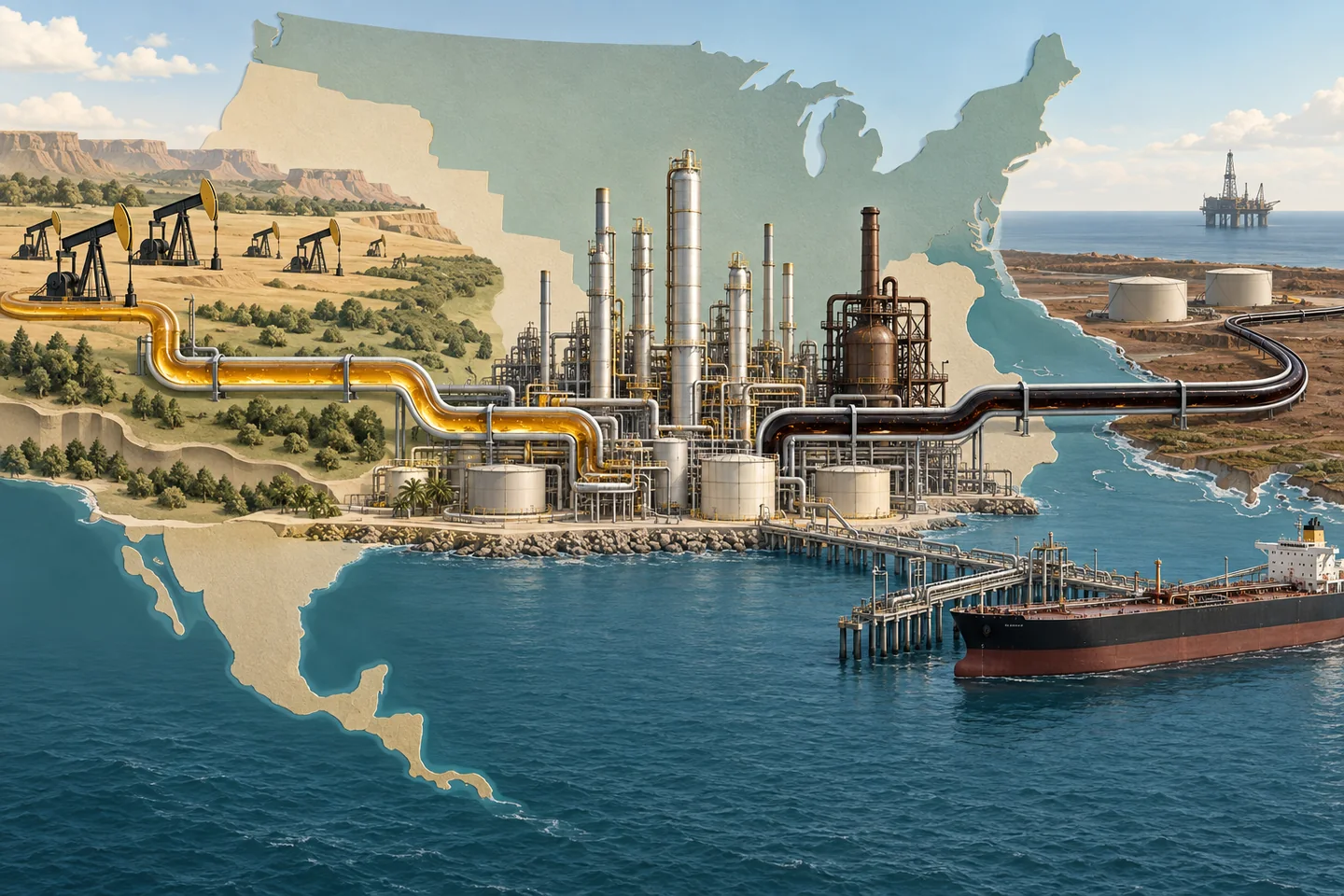
The United States can and does use its own oil. It also imports crude because one barrel is not always a good substitute for another. Much US shale oil is light and low in sulfur. Many large Gulf Coast and Midwest refineries were built or upgraded to turn heavier, higher-sulfur crude into gasoline, diesel and jet fuel. Location and price also help decide which barrel goes to which plant.
How can the United States produce and import oil at the same time?
Think of crude oil as an ingredient. A bakery may grow wheat nearby and still buy a different flour for a certain recipe. Refineries work in a similar way. Each plant has equipment, pipes and product goals that make some crude grades a better fit than others.
In 2025, the United States produced a record 13.6 million barrels of crude oil per day. It still imported about 6.2 million barrels per day, exported about 4.0 million barrels per day, and fed about 16.37 million barrels per day of crude into US refineries. These are separate flows, so the bars should not be added as though they form one pile.
Oil also moves into and out of storage tanks. Small data fixes affect the final balance. Source: US Energy Information Administration.
What is the difference between light, heavy, sweet and sour oil?
Light and heavy tell us how dense the oil is. Light crude has more small parts. Heavy crude has more large parts. A refinery must break up those large parts to make more fuel.
Sweet and sour describe sulfur. Sweet crude has less sulfur. Sour crude has more sulfur. A refinery must remove much of that sulfur from its fuels.
Common in US shale production
It is easier to turn much of this crude into lighter products. WTI is a familiar US light crude reference.
Important to complex refineries
These barrels need more processing. WCS and Mars show two different heavier or sourer grades.
These names are only a first step. Use the crude-quality chart and world map to compare each grade's density, sulfur and home region.
Why were many US refineries built for harder-to-process crude?
Heavy and sour crude often costs less than light sweet crude. It takes more tools and energy to turn it into fuel. Some US plants already own those tools. They may save money by buying cheaper heavy crude and putting their costly equipment to work.
What does a coker do?
A coker heats the thick material left after the first step. It turns some of that material into lighter liquids. It also makes a solid called petroleum coke. In 2019, US plants could send more than 3 million barrels per day through cokers. A plant may waste that costly gear if it runs only very light crude.
What do hydrocrackers and sulfur units do?
A hydrocracker uses heat, pressure and hydrogen. It breaks large oil parts into smaller ones. Other units take sulfur out of fuel. These tools let a complex plant use crude that a simple plant may avoid.
Why not send every US barrel to a US refinery?
- The quality may not be the best fit. A plant designed around heavier feedstock may get better results from imported heavy crude than from another light barrel.
- The refinery may be in the wrong place. Pipelines do not connect every oil field to every refinery. Coastal shipping and foreign pipelines can make an imported barrel easier to reach.
- The price may favor a trade. A complex refinery may buy discounted heavy crude while a foreign refinery pays more for US light sweet crude.
- Refiners sell products as well as fuel the home market. US plants can import crude, process it, and sell gasoline, diesel or jet fuel at home or abroad.
A real refinery can blend several grades. Contracts, maintenance, product demand and transport costs can change the mix.
Where does imported US crude come from?
Canada is the largest source. In 2025, the United States bought about 3.9 million barrels per day from Canada. Pipes take Canadian crude to plants in the Midwest and on the Gulf Coast. Canada also makes heavy, sour Western Canadian Select. That grade can be a good fit for a complex plant.
The United States also bought about 490,000 barrels per day from the Middle East Gulf in 2025. The EIA said 88% was medium sour crude. Most of it went to the West Coast and Gulf Coast.
Would US refineries stop without imported oil?
Not all of them. US plants already use a lot of oil made at home. But a sudden stop to imports would give some plants fewer grades to choose from. A plant might use a new mix. It might pay more to ship oil. It could also make less fuel or need costly changes.
The result would vary by place. Gulf Coast plants are close to many pipes and ports. West Coast plants are far from most US oil fields. Few pipes cross that gap.
What is the simple answer?
Crude quality, plant design, location and price do not line up in one neat system. The United States uses oil made at home. It sells some light crude abroad. It also buys crude that is a better fit for some US plants. The refinery-capacity guide shows the size of these plants. The oil benchmark hub explains why there is more than one “oil price.” To follow these flows month by month, open the US oil balance dashboard.
Test yourself. Check what you learned with the reading oil market data quiz: 5 quick questions, each with a short explanation.
Sources & further reading
- EIA: US crude oil production reached a record in 2025 →
- EIA: 2025 US crude oil exports, imports and net imports →
- EIA: US refinery net input of crude oil →
- EIA: why US refineries still import heavier crude →
- EIA: refining crude oil inputs and outputs →
- EIA: US crude imports from Canada in 2025 →
- EIA: Middle East Gulf supplied 8% of 2025 US crude imports →
Educational reference. How we create and review our content.